
Momentum behind New Approach Methodologies (NAMs) has accelerated rapidly in recent years. Regulators, industry, and academia are investing heavily in human-relevant technologies such as organoids, microphysiological systems (MPS), other complex in vitro models, and computational models.
Governments have been clear. Replace animals in research wherever possible. Reduce everywhere else. This benefits human health and animal welfare.
Importantly, NAMs are already available to cover as much as 90% of the safety risks likely to occur in clinic. As NAMs development accelerates, this coverage will only increase over time.
Many publications have focused on where gaps remain (1, 2, 3, 4). Historically, these analyses have been necessarily general, describing gaps in regulatory impact, data transparency, and biological relevance with broad references to organ systems most commonly investigated in toxicology. Most of these gaps remain but are being actively addressed. Soon, generalities will no longer suffice. It will become critical to be increasingly granular on the exact scientific, technical, and regulatory gaps that need addressing.
In this blog, we’ll explore several specific areas of human biology (and how it interacts with therapeutic drugs) that need further development to meet and (eventually) exceed what animal testing does. This list is non-exhaustive, so if you see any big ones I’ve missed, let me know!
Complex Metabolite Toxicity
For small molecules, many toxicities arise not from the parent compound but from reactive metabolites generated through multi-step metabolic pathways.
Classic examples include chemicals such as 2,6-dinitrotoluene, where metabolism occurs through multiple steps between interacting organs. Here, a half dozen or more enzymatic interactions occur back and forth between two organs to produce reactive intermediates capable of damaging DNA or cellular proteins.
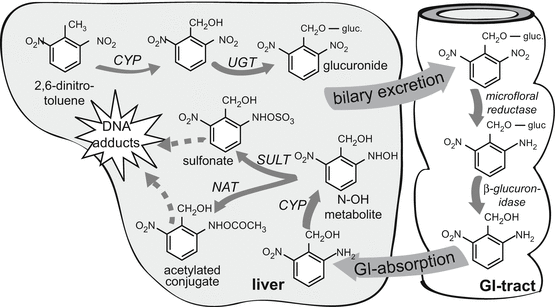
Historically, whole-animal models were assumed to capture these risks because they incorporate:
- hepatic metabolism
- systemic circulation
- secondary metabolite formation
- downstream organ exposure
However, species differences in metabolism are substantial. Differences in cytochrome P450 enzymes, conjugation pathways, and transporter expression often lead animals to produce metabolites that humans never generate or fail to produce metabolites that are clinically relevant.
This issue has been recognized by regulators for decades. The FDA’s Metabolites in Safety Testing (MIST) guidance specifically addresses situations where human metabolites exceed those observed in animal studies, requiring additional evaluation.
NAMs are increasingly capable of addressing this challenge through:
- mixed organoid experiments
- multi-organ microphysiological systems
- computational metabolism prediction
Because these systems use human metabolic enzymes, they may ultimately provide more clinically relevant metabolite profiles than animal models. However, more complex multi-organ systems must still be designed and validated to better predict complex metabolite risks. Can your system predict the toxicity of 2,6-dinitrotoluene?
The Complexity of the Immune System
Another frequently cited challenge is the complexity of the human immune system.
Drug safety issues can arise from mechanisms including:
- T-cell activation and immune tolerance
- long-term B-cell maturation and antibody responses
- complement activation
- cytokine release and systemic inflammation
Reproducing the full immune system in vitro is extraordinarily difficult and may border on impossible.
Again, animal models can struggle here as well. There are “fundamental differences between humans and the animals we typically use to study the immune system”.
One of the most well-known examples is the TGN1412 clinical trial, where a monoclonal antibody caused catastrophic cytokine storm in six healthy volunteers during a Phase I study. Preclinical testing, including studies in non-human primates, failed to predict this reaction.
Subsequent research showed that human effector memory T-cells express CD28 receptors differently than those in primates, explaining the species-specific immune response.
NAMs approaches are now targeting immune complexity through:
- human PBMC cytokine release assays
- immune-competent organ-on-chip systems
- lymphoid organoids
- high-content immune profiling platforms
No single system can currently approach replicating the entire immune network. This is a clear gap. However, mechanism-focused human assays may provide clearer insights into immune risk than animal models that rely on fundamentally different immune systems. How do we develop a complete human immune system NAM? Do we need to?
Systemic Responses
Some toxicities emerge not from damage to a single organ but from interactions between multiple physiological systems.
Examples include:
- systemic inflammation
- endocrine disruptions affecting multiple tissues
- cytokine-mediated cross-organ responses
Historically, animal studies were considered necessary to detect these systemic effects.
However, newer technologies are increasingly capable of modelling these interactions:
- multi-organ microphysiological systems
- microfluidic circulation platforms
- physiologically based pharmacokinetic (PBPK) modelling
- systems biology simulations
Importantly, the use of these systems to evaluate systemic outcomes is still being validated. It is critical for regulators to evaluate how often current animal models prevent harm in humans by uniquely identifying systemic safety risks. Do current NAMs sufficiently evaluate multi-organ systemic responses?
“Unknown Unknowns”
It can be strange to consider “unknown unknowns” as a “known” risk of adopting alternative technologies, but it is one frequently discussed by toxicologists (and Former Secretaries of Defense, alike). Mechanisms that we do not fully understand may result in lethal toxicities in humans and could possibly be identified in preclinical testing beforehand.
Currently, these “unknown unknowns” are dominated by human-specific (and even patient-specific) biology, such as unique genetic polymorphisms, existing unstudied comorbidities, or human-specific immune interactions.
However, just because most of our discussion of these risks is human-specific, it does not mean animals do not identify any. It is possible (though evidently poorly discussed in the literature), that these risks are common but animal testing screens them out early, so that humans are rarely exposed to the risk.
Personally, I do not put much stock into such a claim without extensive scientific investigation. But the possibility of the risk still stands.
Regardless, NAMs are already making strides. One of the best ways to catch these risks may be through a layered, multi-NAM safety assessment combining:
- mechanistic pathway analysis
- human-specific cellular models
- high-throughput phenotypic screening
- computational modelling
Will “unknown unknowns” be NAMs’ final hurdle, or should we prioritize risks known to drive most drug failures?
Closing the Gaps
The transition from animal testing to NAMs will not happen overnight. Important scientific challenges remain, particularly in areas involving metabolism, immune interactions, and systemic biology.
But these challenges increasingly appear to be engineering and integration problems rather than fundamental scientific barriers.
As human-based technologies continue to mature, the conversation may gradually shift from:
“What can NAMs not do yet?”
to
“Why are we still relying on models that are less directly connected to human biology?”
Understanding the remaining gaps is therefore not a reason to slow progress. It is a roadmap for where the next generation of NAM innovation needs to focus.
No responses yet